









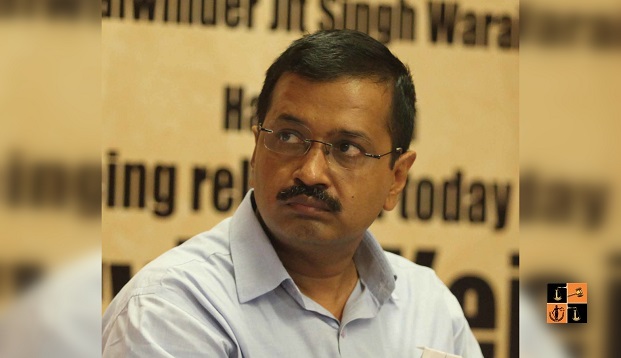
AAP chief Arvind Kejriwal has escalated his recusal application before the Delhi High Court in the liquor policy case, filing a detailed affidavit placing documentary evidence on record to demonstrate that Justice Swarana Kanta Sharma's son and daughter are both empanelled as Central Government counsel, a fact he argues creates an objective and inescapable conflict of interest, given that the Solicitor General of India is opposing his discharge before the very same bench.
The controversy sharpened after Justice Sharma reserved orders on April 13 on recusal applications filed by Kejriwal and co-accused, following a hearing in which Kejriwal, appearing as party-in-person, had orally flagged social media discussions around the professional affiliations of the Judge's family. Armed with RTI material and publicly available records, Kejriwal now placed concrete figures before the Court, his affidavit discloses that Justice Sharma's son, a Group A Supreme Court panel counsel, was allocated 2,487 Central Government cases in 2023, 1,784 in 2024, and 1,633 in 2025, while her daughter holds a Group C panel position.
The core legal tension, as Kejriwal frames it, lies in the Ministry of Law's own FAQ, which confirms that panel counsel assignments at the Supreme Court level are marked by the Solicitor General, the same officer, Tushar Mehta, who appears for the CBI against Kejriwal in the very proceedings at hand.
Kejriwal was careful to draw a precise legal boundary in his submissions, clarifying that he was making no allegation of actual bias or attributing improper motive to the Court. His argument was grounded squarely in the well-established principle of the appearance of justice: that "the very law officer and legal establishment representing the prosecuting side before this Court is also part of the institutional mechanism by which Central Government cases are allocated to the immediate family members of the Judge hearing the matter."
He further raised a procedural grievance, submitting that CBI's arguments ran past 6:15 PM, after which the proceedings were concluded the same evening beyond 7:00 PM, effectively denying him, a party-in-person in a politically sensitive criminal matter, any meaningful opportunity to deliver rejoinder submissions. Consequently, the affidavit doubles as a request for oral hearing time to place these facts before the Court before a final decision is rendered on the recusal plea.
The operative relief sought is unambiguous: Kejriwal has urged that in a criminal matter of this political sensitivity, where the prosecuting agency is the CBI, where the Government's senior-most law officers appear against him, and where the Judge's immediate family holds live, active Central Government panel engagements routed through the same legal establishment, the cumulative circumstances render the continuance of the proceedings before Justice Sharma incompatible with the full appearance of judicial neutrality that the law demands.
Orders on the recusal applications remain reserved.
Disclaimer: This news/ article includes information received via a syndicated news feed. The original rights remain with the respective publisher.
Picture Source : <a href="https://commons.wikimedia.org/wiki/File:Arvind_Kejriwal_(potrait).jpg" title="via Wikimedia Commons">RAJINDER PAL SINGH BRAR</a> / <a href="https://creativecommons.org/licenses/by-sa/4.0">CC BY-SA</a>


















